
By Reba Wilson
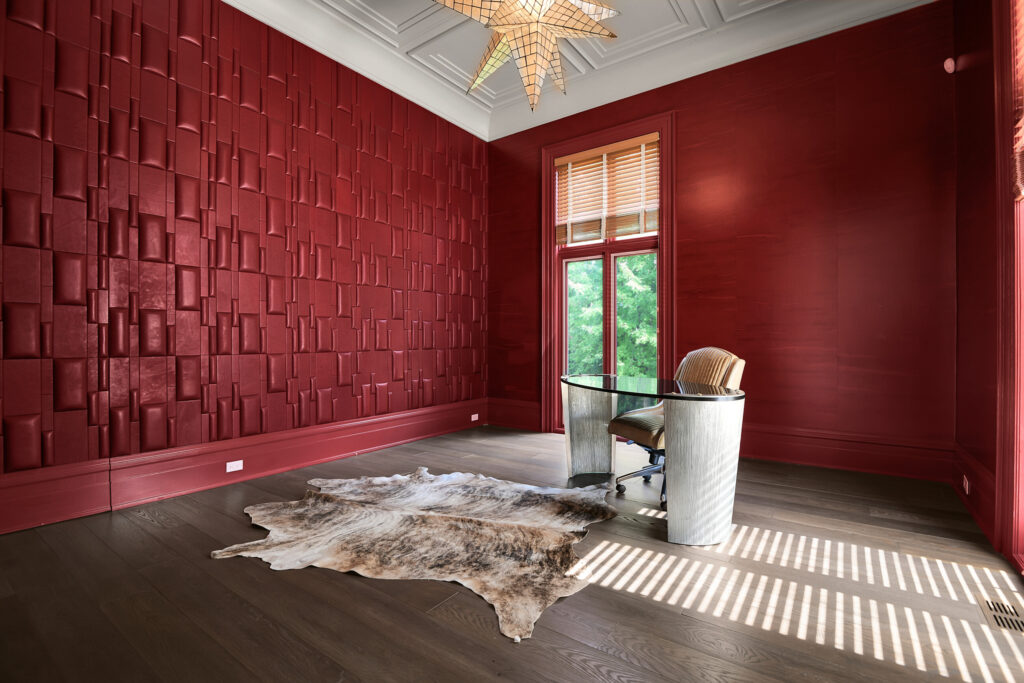
Textural change-ups elevate design interest. Whether your esthetic skews modern or traditional, the application of the following wall elements will help introduce layers to your overall design. This can bring a drab space into the realm of sophisticated and unexpected.
WALL COVERING
There are many clever ways that wallpaper can be employed to promote texture and sophisticated design. It can be used to elevate small spaces, like a powder room or hall closet. It can also be used to create a focal point in a main living space, acting like a wall mural. Wallpaper has the added benefit of showcasing a repeated pattern or theme, which can negate the need for traditional art. It can also help promote a certain colour palette, creating a pop of colour that undergirds a singular theme.
Wrapping a small room in wallpaper can be an ultra-luxurious and high drama move. In a condo or other space with bulkheads, the wallpaper can even create a feature wall and extend upwards over the bulkhead, making it look design-forward rather than a result of circumstance.
One of the fun things about wallpaper is its breadth; materials can vary from hand-painted or silk to woven or enhanced with metallic accents. Textured or metallic paper can also interact beautifully with a room’s lighting, enhancing the overall effect. As internationally acclaimed interior designer Ginger Atherton says: “Today, with the new technologies, you can do or replicate anything—in any texture you want.” Ginger cites wallpaper as a (sometimes) inexpensive way of enhancing beauty, explaining that wallpaper can cost anywhere from $5 to $5,000 per yard. Technology has made wallpapering much easier, with many companies providing measurements and scene layouts virtually from your phone. As a result, wallpaper allows you to achieve anything a custom mural artist would have previously had to provide.
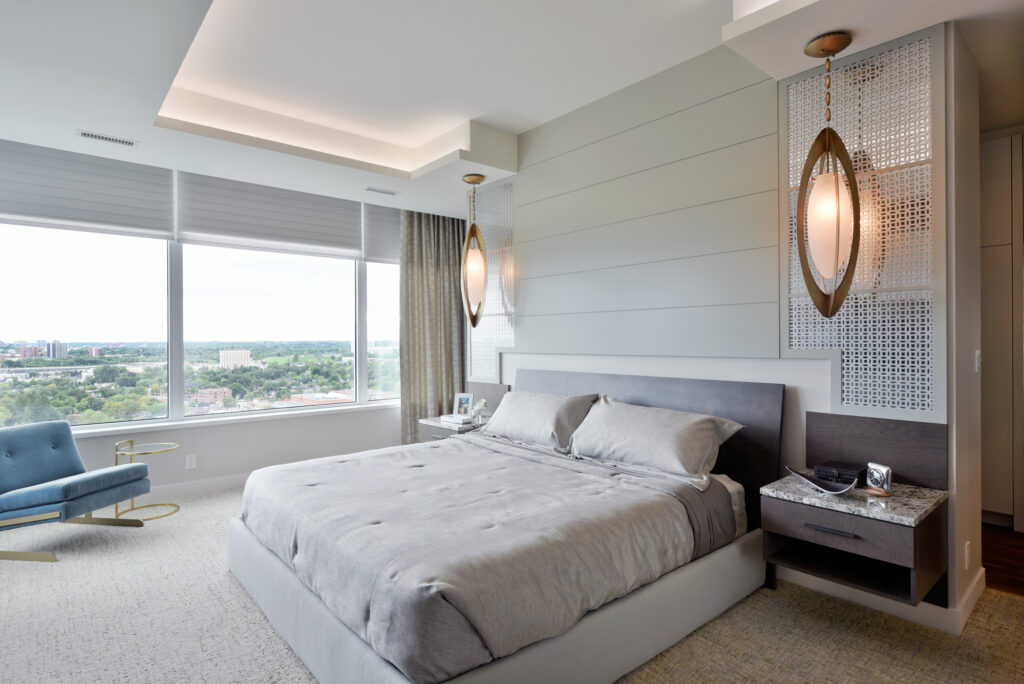
In bedrooms, wallpaper can help enhance the sense of relaxation, particularly when in natural hues. Fabric-upholstered walls offer a luxe finish that can be used for sound absorption to help promote restfulness.
Ginger stresses that the new wallpaper trends are a far cry from the classic damask and floral-printed wallpaper of ages gone by. She says, “The ability to print photography on any surface allows for any image to be printed on tile, wallpaper or any surface.” What is also new is that materials like velvet, foam and tile can be printed on, allowing for over-the-top interiors. And even more amazingly, “You can now run wallpaper railroad—side to side—so that there are no seams and papers can be done in 10 x 14-foot width.” This enables you to print one seamless piece for a large swath of wall. Cue the drama.
While there are many elegant, age-old purveyors, like Morris & Co., de Gournay and Schumacher, modern fashion brands also want in on the wall covering fun. Missoni, Gucci, Cynthia Rowley and Dolce & Gabbana are all examples.
 WALL PANELLING
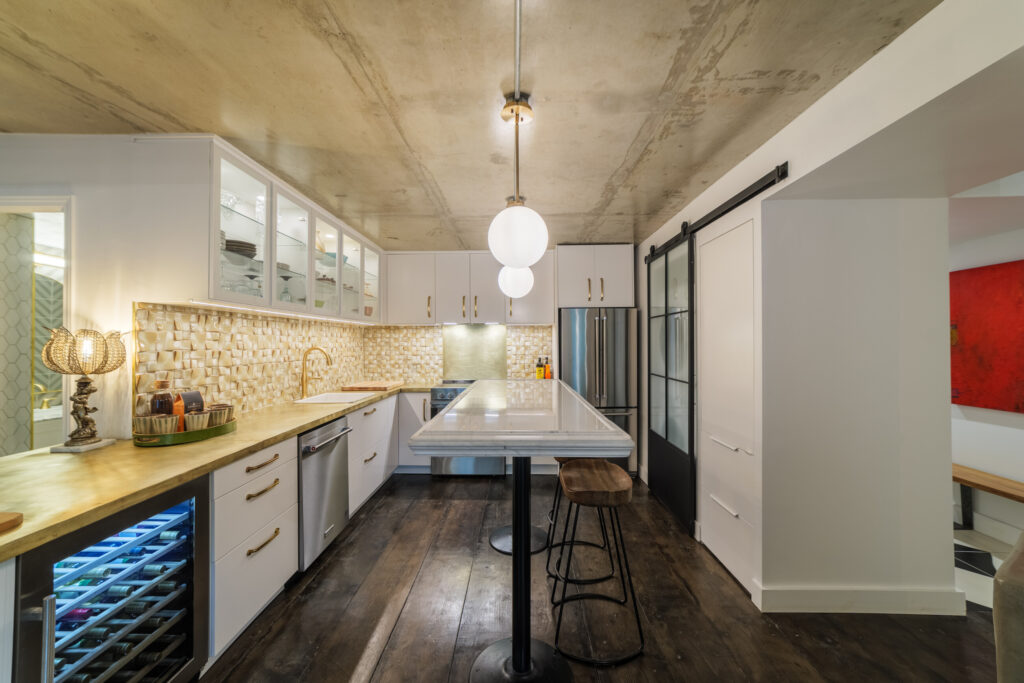
Wood, tile and mouldings can similarly be employed to add texture. Contrasting or geometric tiles in a bathroom create a sense of fun while also adding texture. Relief tiles—moulded with waves or geometric protrusions—can also be installed on walls or as a backsplash to create a statement.
Wood wall panelling can add richness and warmth and easily transform a space. Mouldings offer a similar intrigue. Wainscotting and crown or base mouldings work great to create texture in a more traditional space.
 GLASS
GLASS
Glass can serve as a way of bringing in light or views. One of glass’s most interesting features is its internal contradiction: It is a material that is both soft and hard. Though at times stark and modern, the softness of the material is apparent in the way it refracts light.
To add a modern feel that facilitates free light transfer, install glass walls as room dividers. This trend works great for more utilitarian spaces, like home offices or fitness rooms. It is particularly effective in a lower-light space or one where adding drywall would eliminate natural light.
Translucent glass is an excellent way of bringing light in while retaining privacy. It can come in many forms that support different looks. From antique glass—whose waves are evocative of bygone production genres—to frosted and fluted glass, all these styles provide some mystery while still allowing light to travel through. A combination of transparent and translucent panes can also add visual interest. This works especially well on windows whose coverings you wouldn’t generally expect to remove, but whose light you want the room to benefit from. Mixing transparent and translucent glass panes also works well on a door that divides rooms. Lower translucent panes shield the spaces from view, while light pours through the transparent panes.
Atherton also explains: “What is good and timeless always comes around, just like antique mirrored walls from Versailles.” This brings me to another use of glass: Mirrors. Their ability to reflect light enhances a space and can offer a beautiful juxtaposition between old and modern in a space.
If walls could talk, they’d explain that they can do more work. Cladding walls with different textures can make a material difference in the overall presentation of the space.
Reba Wilson is a freelance writer specializing in real estate, lifestyle, travel and food articles. She is also a luxury specialist broker with Christie’s International Real Estate in Canada.