
Post-Parliament Hill, former federal environment minister Catherine McKenna has written a memoir, Run Like A Girl, and broadened her climate leadership on the global stage.
By Hattie Klotz
Photos by Ashley Fraser
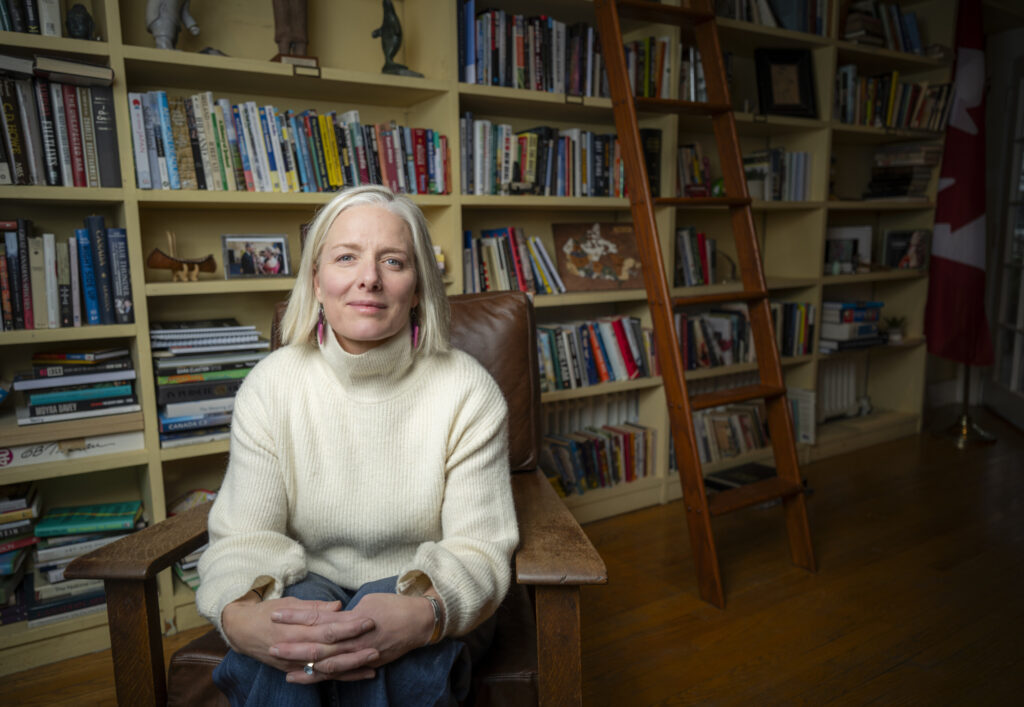
When Catherine McKenna decided to launch her bid to enter politics in the Ottawa Centre riding, a note she made to herself in 2014 read, “I will be true to myself.”
In her recently published memoir, Run Like A Girl: A Memoir of Ambition, Resilience, and Fighting for Change, and a subsequent interview, the former minister of the environment and climate change does exactly that. Catherine McKenna lives, breathes, eats and sleeps climate action. The answer to every question comes back to her central preoccupation with the subject. “I really worry about climate change,” she says, “I think constantly about how to make the case that we must move forward on climate change.”
She arrives on a cheery red bicycle and gets down to business right away. Like many driven people, she is high energy and speaks at great speed. After an initial pause to consider each question, the thoughts and ideas tumble from her mouth like a cascading waterfall.
One is left with the distinct impression that she speaks entirely from the heart, unfiltered, but perhaps this is the result of years on the front lines of politics, and she is, in fact, careful of what she says. Because lord knows, she’s been through the wringer.
Catherine has been labelled with every slur it’s possible to hurl at a woman and plenty used against men, too. She’s suffered threats of violence and constant harassment on social media. She has feared for her own and her family’s safety.
“I spoke out at some cost,” she says modestly, perhaps not wanting to dwell on the woes of the past. And yet she’s still smiling, still engaging in the climate discourse, albeit it from outside politics.
Catherine decided to retire from politics after two terms, just one month shy of being awarded her parliamentary pension. She’d likely have handily won a third, but knew it would be disingenuous to voters to do so, just to guarantee her financial future.
“I viewed politics as a vehicle for making change,” she says. “I always said I wouldn’t be there forever—and no, I don’t miss it. It’s better to continue to make change from outside government.”
These days, she is CEO of Climate and Nature Solutions, a climate advisory firm, and is also co-founder of Women Leading on Climate, through which she continues to advocate for the environment. “How do you get people to think about the future?” she asks rhetorically. “Through their children” is her answer.
“Women are at the forefront of advocating for more ambitious climate action,” she writes, “and after a decade of working on climate, I’m more convinced than ever that empowering women is one of the most effective ways to make real change.”
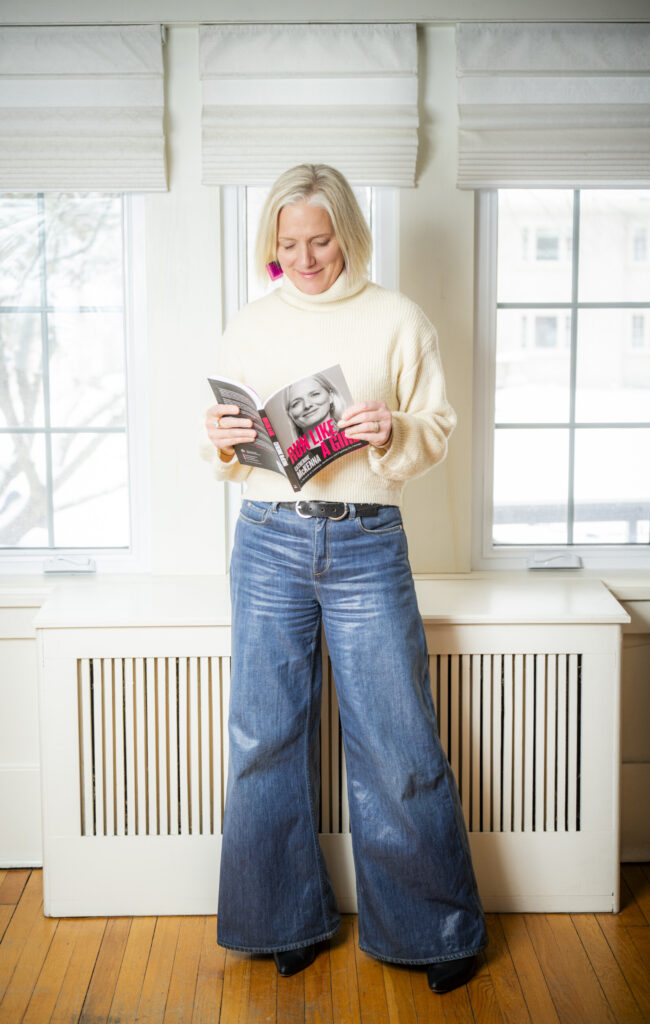
Run Like a Girl is not your average mid-career memoir. It’s more like a scrapbook, pages dotted with plentiful photographs and anecdotes from Catherine’s childhood, swimming accomplishments (she competed in the Olympic swimming trials but didn’t make the cut) and political career.
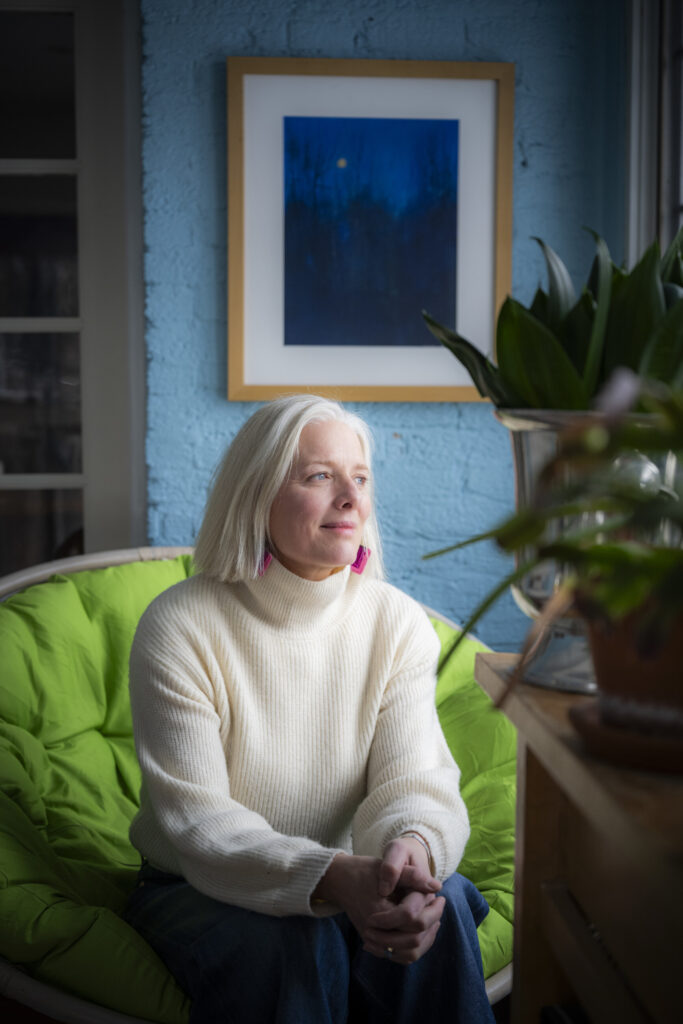
Chapters are short, sometimes just one page, but you’re left with a good sense of the person who has survived many years on the front lines. She’s got grit and that’s one of the reasons she wrote this book. “I want to encourage more young people and women to make change,” she says. “I want people to be brave and trust their instincts. One thing that stands out to me is how much strength can be drawn from others, especially women who step up, speak out and refuse to be silenced. We need more of those voices—loud, clear and unapologetically themselves—because the challenges ahead are immense,” she writes.
There are some things that don’t make the pages, however. Her family is off-limits and remains so to this day. While she alludes to a less-than-stellar relationship with the prime minister in the latter days of her time with the Trudeau government, she doesn’t dish the dirt.
However, she does touch on her relationship with religion, a topic many people shy away from publicly.
Brought up as an Irish Catholic, she’s not a fan of the rigid doctrine of the church and its social conservatism, but does appreciate the social justice endeavours of the Jesuits. She witnessed them first-hand through her uncle Dermot, a Jesuit priest in Ireland, and when she lived in East Timor during the independence crisis as priests sheltered freedom fighters in their churches.
“Also, the Catholic church has framed climate action as a social justice question,” she says, “and I applaud that as it’s broader than simply an economic problem.” One of her most treasured keepsakes from her years in politics is a copy of the encyclical letter, Laudato Si: On Care for Our Common Home, by Pope Francis. Presented to her in a private audience at the Vatican in 2017, it is inscribed, “To Hon. Catherine McKenna, Please keep on caring for our common home. God bless you and pray for me, Francis.”
Asked for a highlight of the career that has taken her to all the greatest halls of power, you might expect her to mention the state dinner she attended at the White House with President Obama or her Légion D’honneur award from the government of France or even that random phone call she got from Arnold Schwarzenegger.
But without hesitation she names a 2017 visit to the Qikiqtani region of Nunavut in the high Arctic, where she was a guest of the Inuit, announced the creation of Tallurutiup Imanga—Canada’s largest marine protected area, went kayaking among icebergs and ate raw seal.
For her lows, she says, “It wasn’t the hate, although that was brutal and scary sometimes. It was that I would make a mistake. I’d lie in bed staring at my ceiling fan, worried about my least happy child, but also worrying about what I’d screwed up.”
One of Catherine’s greatest joys in life is swimming. She does it anywhere there’s a body of water big enough to windmill her arms. On an unseasonably warm weekend, she has been swimming in Dow’s Lake in Ottawa and Meech Lake in the Gatineau Park. “It was lovely,” she says with a smile that acknowledges the contradiction, “but worrying, from a climate perspective, that I can do this.”
She’s also a big reader (her book club features in the memoir) and chooses Montreal writer Heather O’Neill’s Lullabies for Little Criminals as her favourite contemporary book and The Dubliners by Irish writer James Joyce as a cultural touchstone from her childhood. “My dad insisted that we all read it, especially his short story The Dead, which I think has the best final line of any book.”
His soul swooned slowly as he heard the snow falling faintly through the universe and faintly falling, like the descent of their last end, upon all the living and the dead.
– James Joyce

She professes to be no great cook, but loves spicy food. “I can love almost any food if I’m able to add hot sauce—the hotter the better!” she says. As proof, she sends along a picture of seven fiery sauces lined up on her kitchen counter.
She’s also happy for people to know that inside the carapace of a woman who has survived politics, “I’m very sentimental. I cry at commercials.”
At the end of it all, she believes, “The climate change discussion is always going to be a fight, but just because we have a president to our south who doesn’t believe in it, doesn’t mean we should give up.”